
The Sunday Signal: The Loom, the Layoff, and the Life Raft
The Sunday Signal — Issue #42 | From the handloom weavers of Yorkshire to the junior developers of 2026, the story of skilled work being eaten by machines follows the same brutal arc

The Bottom Line Up Front
Two hundred years ago, Britain’s most skilled craftsmen watched their livelihoods unravel. Not because they lacked talent. Because the machine did not need their talent. It needed their output.
The software developers, paralegals, and junior analysts of 2026 are living through the same story. The machinery is different. The economic logic is identical.
This week: the historical pattern that explains everything about the AI jobs crisis, the ten roles at the sharpest end of the displacement curve, what my latest Yorkshire Post column reveals about who actually wins, and a concrete three-phase plan for anyone who wants to own the machine rather than be replaced by it.
This issue is also available as a podcast — an experiment using an AI-generated version of my voice. Listen on Spotify or Apple Podcasts and tell me what you think.
Part One: The Weaver’s Warning
The Canary That Nobody Listened To
There is a story from the English Midlands that every professional facing AI displacement should know by heart. It begins around 1810. It ends in migration, poverty, and the permanent extinction of a skilled trade. And it contains every lesson we need for 2026.
The handloom weaver was the software developer of the early nineteenth century.
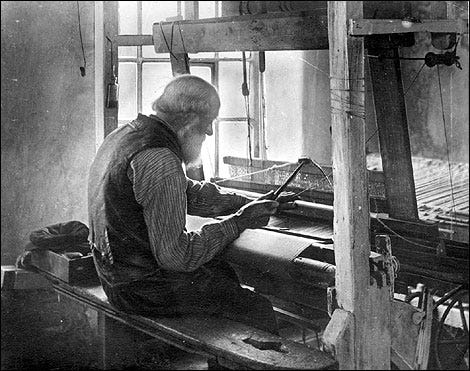
This was not a low-skill labourer. This was a craftsman with years of apprenticeship behind them, a sophisticated understanding of materials and mechanics, a home-based operation with genuine autonomy, and a wage that placed them firmly in what we would today call the middle class. In the late 1700s, a skilled weaver in Lancashire or Yorkshire could earn enough in three or four days to support a family for the whole week. They owned their tools. They set their own hours. They had leverage.
That leverage came from knowledge you could not simply acquire. The craft required mastering the tension of the threads, the rhythm of the shuttle, and the relationship between warp and weft. This knowledge was the moat. It was the thing that made a weaver irreplaceable.
Until, of course, it wasn’t.
The Slow Squeeze (1815–1830s)
The power loom did not arrive like a cannonball. It arrived like a tide. Gradual, inevitable, and ultimately overwhelming.
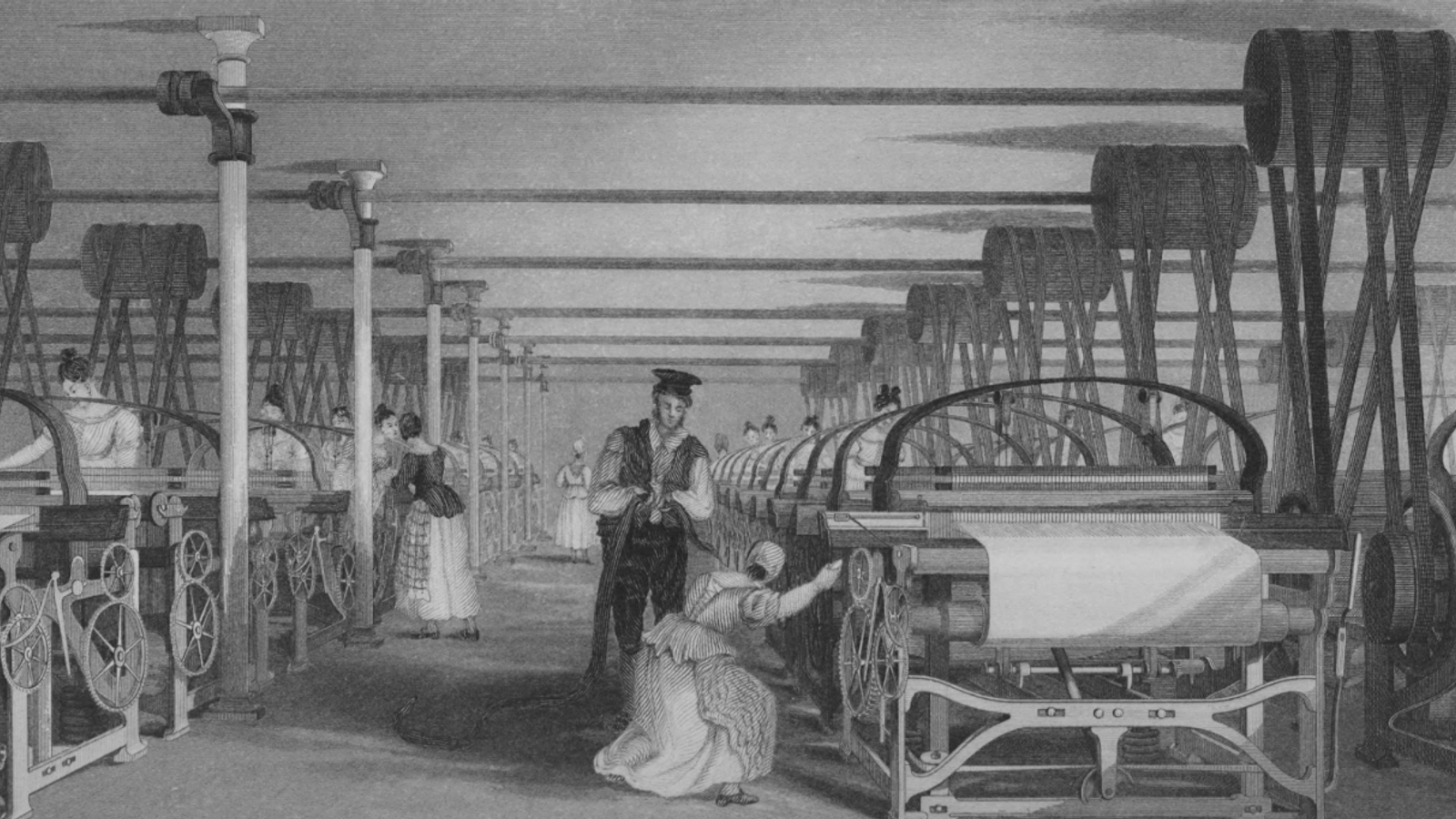
Between 1815 and the 1830s, weavers did not lose their jobs overnight. Something more insidious happened. The price of their output collapsed. A steam-powered loom could produce twenty times more cloth per hour than a human. Factory owners did not need to fire the weavers. They simply drove the market price of cloth so low that weavers had to work twice as hard for half the money just to survive.
The weekly wage fell from roughly 25 shillings in 1800 to just 5 shillings by 1830. The same hands. The same skill. A fifth of the income.
They argued that machine-made cloth was inferior. For a while, they were right. But the machines improved. Then the consumers stopped caring about the difference.
Sound familiar?
In 2026, a junior copywriter argues that AI-generated content lacks soul. A Tier-1 support agent argues that customers prefer talking to a human. A junior developer argues that AI code requires too much review to be reliable. They are not wrong. Not yet. But the machines are improving. And the economics are already shifting.
This is the Slow Squeeze. The job title survives. The wage, the job security, and the career trajectory quietly erode.
The Luddite Rebellion: The Emotional Breaking Point
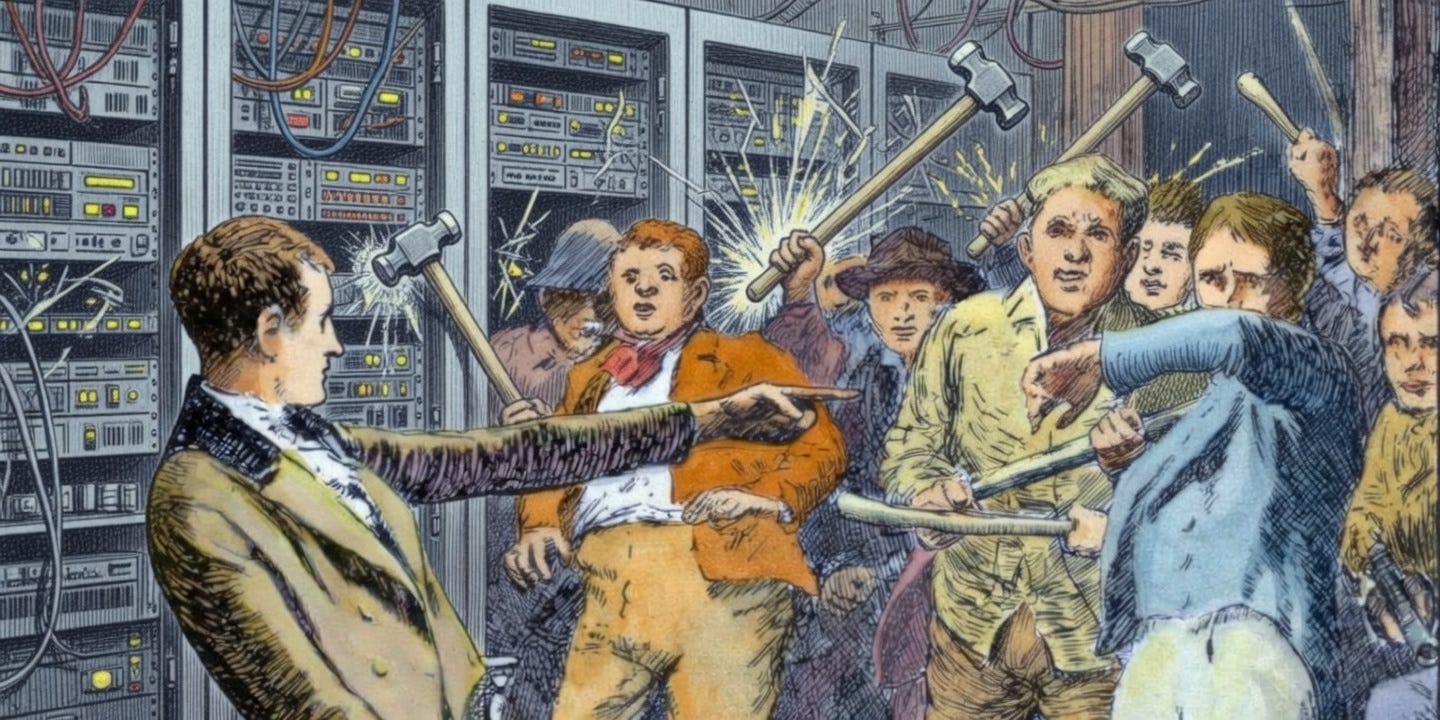
As their livelihoods collapsed, the weavers did not simply retrain. They fought back. Organised groups of skilled textile workers broke into factories at night to smash the power looms with sledgehammers.
The popular myth is that the Luddites were ignorant people who feared technology. That is a comfortable story for those who benefit from automation. The reality is more complex.
The Luddites were not anti-technology. They were anti-exploitation.
The machines were being used specifically to bypass existing labour laws, undercut agreed wage structures, and destroy a standard of living that skilled workers had built over generations. Their grievance was not with the loom itself. It was with the fact that the productivity gains were going entirely to the factory owners.
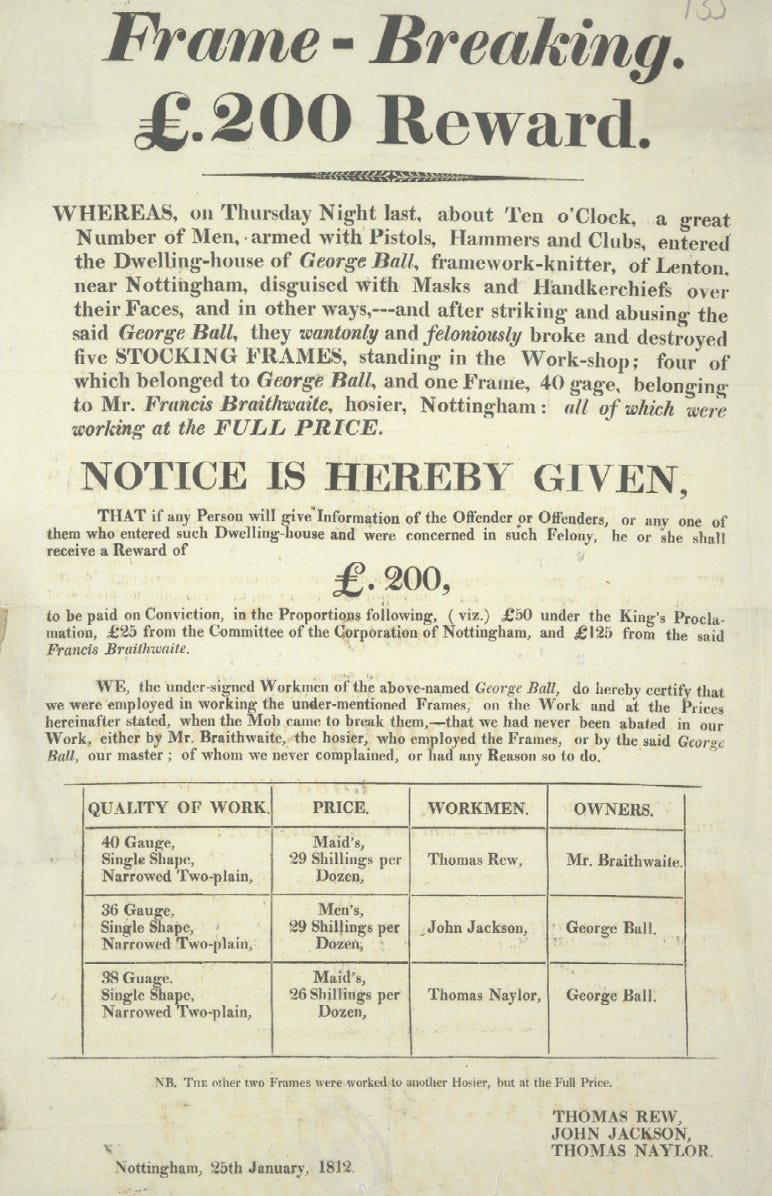
Parliament made machine-breaking a capital offence, punishable by death. Soldiers were deployed. The movement was crushed. The weavers lost.
By the 1840s, the handloom weaver as a career was functionally extinct. Many ended up working in the very factories they had fought against, no longer as independent craftsmen but as machine overseers. The value had migrated from weaving the cloth to maintaining the loom. Those who could not make that transition emigrated, thousands of them, to the United States and Australia.
Their children benefited. Lower cloth prices meant cheaper clothing for everyone. New industries emerged. The weavers lived through the worst of it. Their grandchildren inherited the benefits.
This is the U-shaped recovery. And it is exactly the shape of the curve that today’s displaced professionals are at the beginning of.
1826 vs. 2026
The junior software developers, paralegals, market research analysts, and content writers of today are the handloom weavers of 1820. Talented. Genuinely skilled. The apprenticeship was real. The moat existed.
But the power loom has arrived.
The task is no longer to weave faster than the machine. That race is over. The task is to understand who owns the factory.
Part Two: The Ten Jobs in the Crosshairs
As we move through 2026, the conversation has stopped being theoretical. AI is no longer the future of work. It is a standard employee in offices across the world.
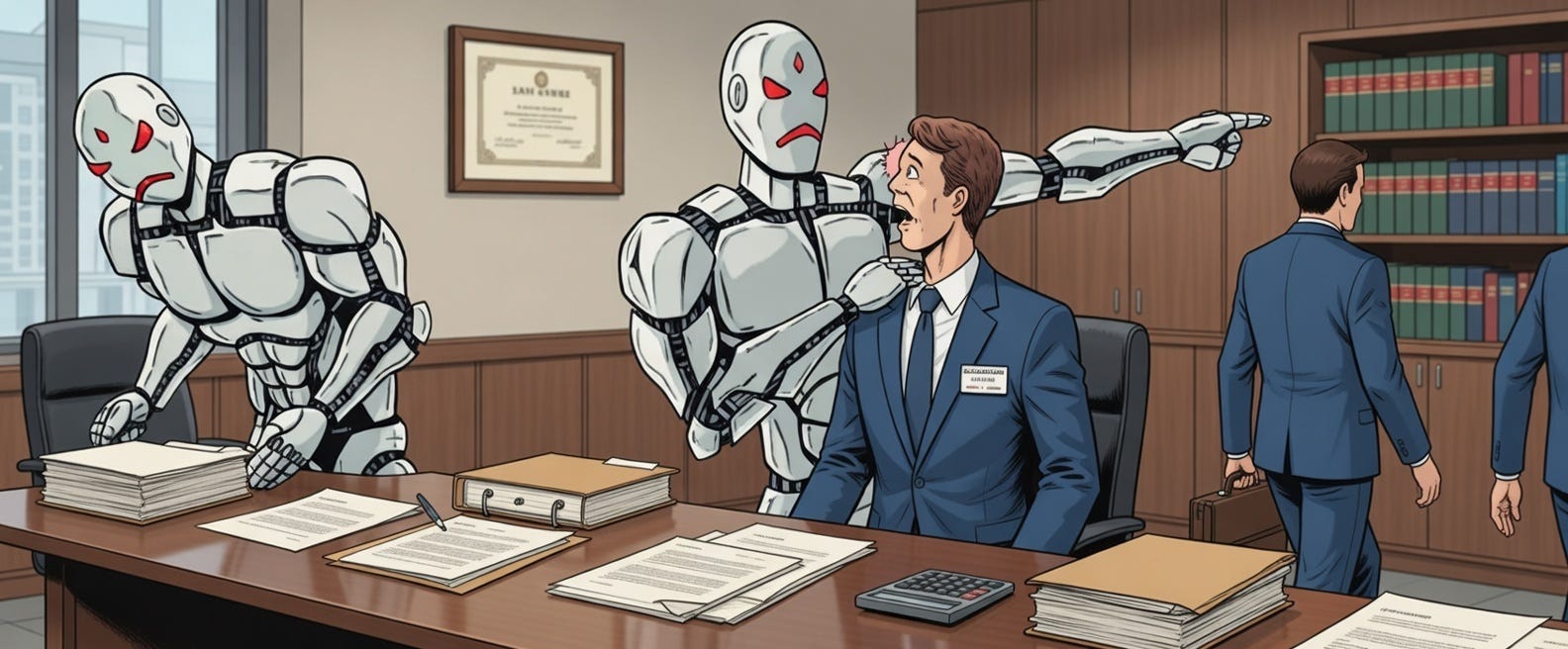
The research below draws on Goldman Sachs, the World Economic Forum’s Future of Jobs Report 2025, McKinsey’s State of AI 2025, Gartner’s Predicts 2026, the OECD Digital Education and Employment Outlook, and ADP’s latest labour trend data. This is not speculation. It is current employment data.
1. Customer Service Representatives (Tier 1)
Agentic AI has moved far beyond the frustrating chatbots of 2022. Autonomous agents can now process refunds, troubleshoot faults, and handle complaints with voice responses indistinguishable from a human. Tier-1 support is almost entirely automated at the companies moving fastest. Gartner’s analysis notes that total replacement leads to a measurable drop in customer sentiment, so human agents survive but only in conflict resolution. The complex complaint. The edge case the AI cannot navigate without reputational damage. The weaver is now the loom overseer.
2. Data Entry and Document Clerks
AI vision and OCR have reached a precision in 2026 that makes manual data entry indefensible. The WEF’s Future of Jobs Report confirms clerical and administrative roles are among the fastest-declining categories between now and 2030. The role transforms into Data Quality Auditor. The skill required is not typing speed. It is pattern recognition and judgment.
3. Junior Software Developers
For two decades, learning to code was the single most reliable piece of career advice a young person in Britain could receive. McKinsey’s State of AI 2025 identifies coding as one of the functions seeing the fastest acceleration in agentic AI deployment. The entry-level runway is gone. New developers entering the market are expected to be System Architects and AI Orchestrators from day one. More on this in Part Three.
4. Paralegals and Legal Researchers
Specialised Legal LLMs can review thousands of pages of discovery documents, summarise case law, and flag inconsistencies in a fraction of the time it takes a junior associate. Goldman Sachs specifically identifies legal assistants as among the roles with the highest exposure to generative AI. Law firms are not waiting. Junior headcount is being reduced. The value moved from reading the brief to arguing the case.
5. Bookkeepers and Payroll Specialists
Accounting software in 2026 is effectively self-reconciling. AI automatically categorises expenses, detects anomalies, reconciles bank feeds in real time, and handles routine tax filing. ADP’s labour data shows Professional and Business Services experiencing a measurable cooling in job growth, attributed directly to AI-driven efficiency gains. Strategic Tax Planning and complex financial advisory are where the human value now lives.
6. Basic Content Writers and SEO Specialists
Short-form content, product descriptions, and SEO-driven articles are now generated at scale by AI. In 2026, search engines weight Information Gain, the degree to which content adds something genuinely new. Generic content no longer ranks. The shift is from writer to Content Strategist and AI Editor: the person who knows what angle to take and what the AI confidently gets wrong. As the WEF notes, creative thinking is rising in importance precisely as execution becomes automated.
7. Junior Market Research Analysts
AI can scrape the web, conduct sentiment analysis, and generate a fifty-page market report in under a minute. Gathering data is no longer a skilled role. Interpreting what that data means for a CEO’s five-year strategy, identifying the pattern the data does not show, that is where the analyst earns their salary. McKinsey confirms knowledge management is now one of the leading areas for agentic AI scaling.
8. Telemarketers and Outbound Sales
Cold calling has been taken over by AI voice agents running thousands of simultaneous conversations, never experiencing call reluctance, improving in real time. Goldman Sachs lists telemarketers among the highest-risk occupations for AI displacement. The human sales professional survives only at the warm end of the funnel. When the relationship requires depth. When the negotiation requires reading the room. The cold call is not.
9. Proofreaders and Translators
Neural translation has reached near-perfect functional fluency for most major world languages. Goldman Sachs lists proofreaders and copy editors among the most exposed roles. Survival territory is narrow but real: high-stakes literary translation, legal contracts where precise human accountability is a regulatory requirement. The volume of routine work that once kept professional linguists employed is gone.
10. Template-Based Graphic Designers
For small businesses, the requirement to hire a designer for a logo, a social media asset, or a basic website layout has effectively disappeared. What survives is Creative Direction: knowing what good looks like, what a brand needs to communicate, and what the machine is producing that is technically proficient but strategically empty. The WEF’s fastest-declining jobs data confirms graphic and multimedia designers are under significant structural pressure.
Part Three: Be Nice to the Nerds. While You Still Can.
Building on this week’s Yorkshire Post column
I used to give young people very clear advice. Learn to code. It is the key. I believed it so completely that I helped open a coding academy.
This week, that advice required significant revision.
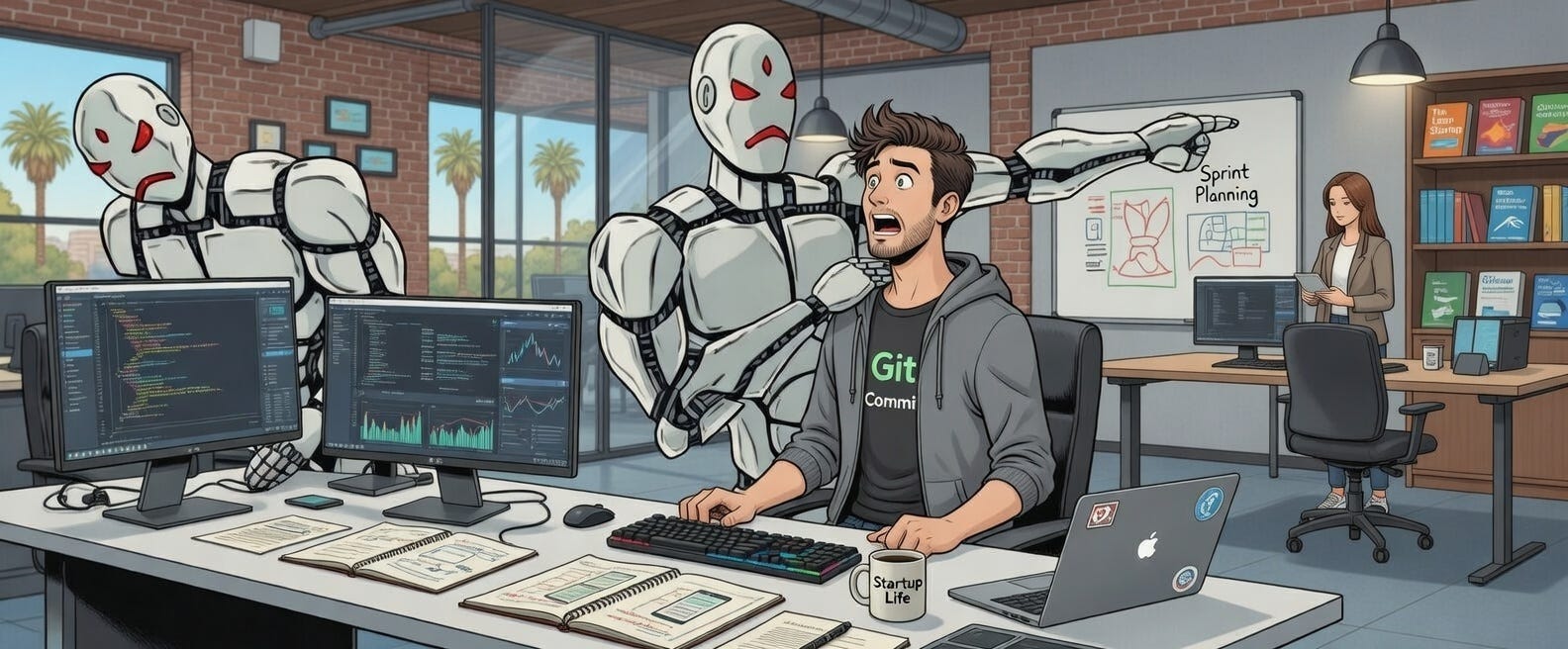
The End of Code as Permission
To understand what is happening, you have to understand what coding actually was during the Internet era. It was not just a technical skill. It was permission.
Creative people had ideas. They needed a translator who spoke machine. The designer could imagine the product but could not build it. The entrepreneur could see the market but could not ship the software. They all hit the same wall: you can imagine it, but can you build it?
That asymmetry gave the programmer their power. This is the story of the Winklevoss twins and Divya Narendra, who conceived a social network called HarvardConnection and needed someone to build it. They recruited Mark Zuckerberg. The creative spark was not the scarce resource. The ability to execute in code was. The translator had leverage over the person with the idea.
That dynamic has now changed.
AI can produce working software of startling quality. What once required a team of engineers working for weeks can increasingly be achieved by a single person with a well-crafted prompt and sound judgment. The machine speaks fluent software. The translator is no longer the bottleneck.
What This Actually Means
If AI can write the code, learning to code is no longer a moat. It becomes table stakes. The equivalent of knowing how to use a spreadsheet. Necessary, perhaps. Sufficient, no longer.
Dario Amodei, Chief Executive of Anthropic, told The Economist at Davos that AI could handle most, possibly all, of what software engineers currently do within six to twelve months. His own team confirmed that at Anthropic, the code is now effectively one hundred per cent AI-generated. Elon Musk has gone further, predicting traditional coding will be obsolete by the end of this year.
I agree with the direction, if not every detail. The mass-market demand for armies of developers writing routine business software is the part most exposed to replacement. The OECD has already identified a significant cooling in entry-level white-collar hiring across member countries through late 2025 and into 2026.
The Upside, and It Is Significant
When execution is democratised, originality becomes the new scarcity.
Domain experts who understand real problems can now build tools without waiting for a technical co-founder. The Winklevoss problem is solved. You no longer need Zuckerberg to build the thing. You are Zuckerberg now.
The winners of the next decade will not be those who can write a function in Python. They will be the people who think clearly, see problems others miss, understand the domain deeply enough to know what quality looks like, and can direct increasingly capable machines toward genuinely useful outcomes.
Be nice to nerds, Gates said. The advice still holds. It is simply that the nerds of tomorrow may look nothing like the nerds of today. They may be manufacturers who understand industrial processes. Lawyers who understand regulatory complexity. Teachers who understand how children actually learn.
The handloom weaver’s skill was weaving. That skill became worthless. But the knowledge of textiles, of markets, of quality survived and migrated into new roles. The lesson is not to abandon what you know. It is to stop confusing the tool you use with the knowledge you hold.
Part Four: How to Be AI-Proof
The 90-Day Survival Plan
The weavers who survived the power loom were not the ones who wove fastest or protested loudest. They were the ones who understood what the machine could not do, positioned themselves where human judgment was irreplaceable, and moved quickly enough to get there before everyone else did.
Three phases. Ninety days each.
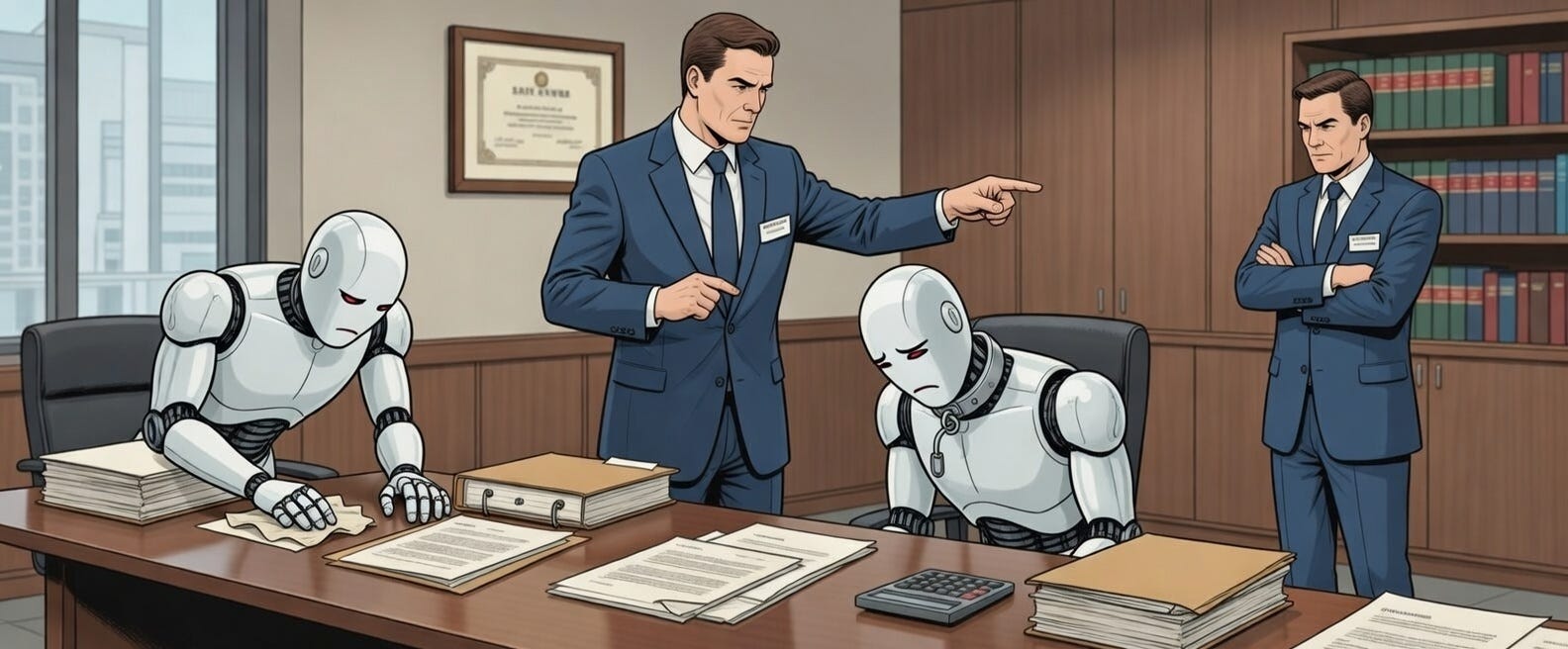
Phase 1: AI Literacy (Days 1–90) Focus: Not coding. Logic.
Real AI literacy means understanding how Agentic AI reasons, where it excels, and where it fails with complete confidence. Where it hallucinates. What kinds of tasks it reduces to triviality and what kinds remain genuinely hard. The WEF identifies AI and big data literacy as the fastest-growing skill category in the 2025–2030 period.
Milestone: Conduct a full AI Audit of your own job.
List every significant task you do in a working week. Sort them into two columns.
Column A: tasks that take 50% or more of your time but require none of your unique knowledge, judgment, or relationships.
Column B: tasks where your specific experience, relationships, or accountability are genuinely what make them valuable.
Column A is your displacement risk. Column B is your survival territory. If Column A is longer than Column B, you need to start moving.
Phase 2: Orchestration (Days 91–180) Focus: Multi-tool integration.
The value in 2026 is not in knowing the tools exist. It is in being able to string three or four AI agents together into a workflow that replaces a process that currently takes human time. This is the difference between using a tool and being a system architect.
Milestone: Build a Digital Twin of your current workflow.
Try Zapier, n8n, or Claude Code to automate the tasks from Column A. The goal is not perfection. The goal is to do it, to understand how agents pass information between each other, where the failure points are, and where a human still needs to make a judgment call.
Once you have built even a basic automated workflow, you have crossed a line. You understand how the machine thinks because you have made it think.
Phase 3: Specialisation (Days 181–270) Focus: Domain-specific logic.
The most AI-resistant professionals in the world share one characteristic: they hold knowledge that is genuinely hard to acquire, hard to encode, and consequential when it goes wrong.
AI can summarise what is known. It cannot replace the person who has spent twenty years learning what is not written down.
Milestone: Get certified in AI Governance or Strategic Risk Management within your specific field.
The Alan Turing Institute, BCS (Chartered Institute for IT), and MIT Sloan Executive Education all offer relevant programmes. Domain depth plus AI fluency plus accountability is the new moat. It is considerably harder to replicate than the ability to write a loop in Python ever was.
The Honest Assessment
None of this is comfortable. The weavers who thrived after the power loom arrived were a minority. Most of that generation struggled. The U-shaped recovery is real, but the bottom of the U is a brutal place to spend a decade.
The difference between 1826 and 2026 is the speed of the information available. The weavers of Lancashire did not have access to a weekly newsletter explaining the pattern they were inside. They did not have McKinsey telling them their core skill was being automated. They did not have the WEF telling them at Davos that their entire career category was being structurally reorganised.
You do.
The question is what you do with it.
🚀 Final Thought
The power loom did not destroy weaving. It destroyed weavers who refused to understand that their value was never in the motion of the shuttle. It was in the knowledge of the cloth.
The AI revolution will not destroy your career. It will destroy the version of your career that requires you to move the shuttle.
The question is not whether to adapt. It is whether you adapt before the wage spiral begins, or after.
The weavers who made it understood one thing early: the machine is not the enemy. The person who already owns the machine and has replaced you is.
Don’t be replaced. Own the machine.
Until next Sunday,
David
David Richards MBE is a technology entrepreneur, educator, and commentator with over 25 years in technology. He writes for the Yorkshire Post and publishes The Sunday Signal weekly at newsletter.djr.ai
Really really good advice.