
The Sunday Signal: Mass AI Layoffs Are Here
Issue #31 - Friday 28 November 2025 - This week: The AI jobs reckoning arrives, Britain’s power problem, and why Paul Gascoigne just exposed a deeper flaw in Silicon Valley’s grand plan.

The Bottom Line Up Front
In August, I wrote that the mass lay-offs in Silicon Valley were not a correction but the opening act of an AI-driven restructuring of the labour market. This week proved the point. The pretence is over. Companies are now saying the quiet part clearly. AI is taking work that once belonged to people. Professions that built their identity on stability are being forced to confront their own disruption.
If you sell time, you are running out of it.
If you sell judgment, you are entering your strongest decade.

At the same time, Britain’s ambition to lead in AI collided with the reality of its energy system. For all the talk of innovation, nothing moves without electricity. And we are nowhere near ready.
And then, in an altogether different way, Paul Gascoigne reminded us that AI still struggles to understand large parts of the society it claims to serve. Technology may speak in universal terms, but it still listens through a narrow set of ears.
Three signals. One truth. AI is not a distant horizon. It is the present tense.
The Jobs Shock Has Begun
In that August column, I argued that the first unmistakable sign of the AI labour shock would not appear in think tank reports or political speeches. It would appear in payrolls. The moment companies stopped hiding behind euphemism and said plainly that machines were doing the work people once did. That moment arrived this week.

HP announced plans to cut thousands of jobs as it embeds AI more deeply across its operations. That reduction represents roughly ten per cent of its global workforce. McKinsey, the consulting giant that once guided others through disruption, has cut more than ten per cent of its own headcount over the past eighteen months. Allianz is preparing to remove up to eighteen hundred call centre roles as AI systems take over routine customer service and claims handling. Clifford Chance, one of London’s leading law firms, has cut business services posts and reshaped others as technology takes on more internal work.
These are not hygiene cuts. They are strategic resets.
For decades, the professional services model relied on a pyramid. Partners at the top, juniors at the base, all held together by process. Partners sold trust and experience. Juniors supplied the hours. But AI now does the work that once filled those hours. The pyramid is flattening.
In August, I wrote that if even software engineers could no longer rely on job security, then no one should assume safety. That warning looks modest now. The roles disappearing today are not low-skilled or peripheral. They are the foundational jobs that shape entire careers.
Automation does not nibble at the edges. It clears space. It replaces the predictable and rewards the exceptional. It punishes those who rely on repetition and elevates those who can interpret, create and decide.
The question now is not whether AI will reshape the labour market. It already has. The question is whether Britain is prepared to reskill, retrain and rethink fast enough to keep up.
Britain’s Power Problem: The Hidden AI Bottleneck
While job losses dominated the headlines, another constraint emerged that may ultimately decide whether Britain competes or falls behind. AI does not run on optimism. It runs on electricity. And the numbers are staggering.
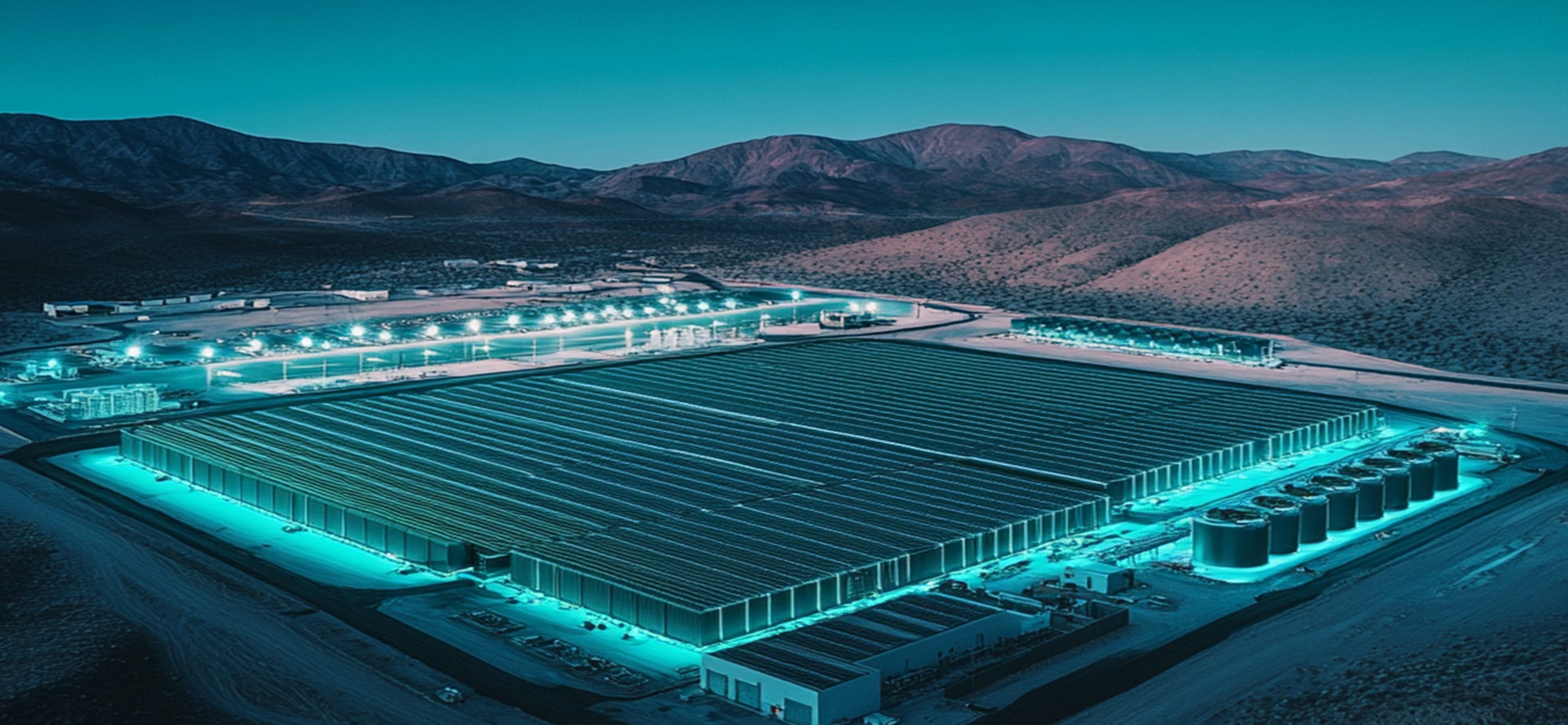
In my Yorkshire Post column on Friday, I wrote that the government’s current goal of six gigawatts of AI-grade data centre capacity by 2030 already understates the true need. Six gigawatts is roughly the electricity demand of every home in Yorkshire.
Yet developers have already announced between 500 and 900 megawatts of new capacity that will need to be powered in the next few years alone. One operator is seeking an entire one-gigawatt site dedicated specifically to AI. And, most striking of all, National Grid is processing up to nineteen gigawatts of new connection requests from data centre operators for delivery by 2031.
Nineteen gigawatts is the electricity consumption of roughly fourteen million homes. A new industrial sector is landing on the grid in a single decade, and we are entirely unprepared for it.
The consequences are already visible elsewhere. In California, brand-new data centres stand idle because local utilities cannot deliver the power. Some of the world’s most advanced GPU clusters are sitting on warehouse floors because they cannot be plugged in. The bottleneck is no longer the chip. It is the socket.
China has taken the opposite approach. It is scaling nuclear, hydro and thermal baseload at a pace the West no longer attempts. AI leadership follows energy leadership. The country that builds the megawatts will lead the models.
This is why South Yorkshire’s vision matters so profoundly. At the Digital Forge Summit, Richard Caborn argued that the region should anchor Britain’s clean power future by becoming the manufacturing base for Small Modular Reactors. The proposed National SMR Manufacturing Centre of Excellence already has more than fifty industrial partners and private customers ready to place orders for British-built reactors.
It is the most advanced SMR proposal in the country. If the first reactor is built abroad, the supply chain follows it. If it is built in Yorkshire, this region becomes the powerhouse of Britain’s AI economy.
AI is not constrained by imagination. It is constrained by electricity. And Britain must decide whether it intends to be a leader or a spectator.
What Gazza Taught Silicon Valley
The most surprising story of the week did not come from a boardroom or a data centre. It came from a recording booth.

Victoria Williams, the ghostwriter of Paul Gascoigne’s new autobiography, tried to use AI tools to transcribe their interviews. The software failed. Completely. It could not understand his Geordie accent. Words like “hide” became “hate”. “Lies” became “lawyers”. Entire passages were lost. In the end she transcribed every word by hand to avoid putting phrases into his mouth that he never said.
On the surface it is amusing. AI cannot understand Gazza. But beneath the humour is a flaw that runs through the foundations of the industry.
Speech recognition systems were trained on what was easy to collect: standard American English, certain southern English accents and the speech patterns of a narrow socioeconomic group. Huge parts of Britain were never included. Accents from the North East, Scotland, Wales and Northern Ireland routinely trip up commercial models. Many Black British and South Asian voices are misinterpreted or ignored entirely.

We have seen this pattern before. Facial recognition systems that worked well on lighter skin and poorly on darker skin. Hiring tools that downgraded CVs because they did not match historical patterns. The issue was not ideology. It was data. Technology reflects the sample it is trained on, not the society it is deployed into.
Gazza exposed the flaw by accident. The machine did not understand him because the machine had never learned to.
Williams said the manual transcription gave her a deeper understanding of his voice and his story. That is the human advantage. But we cannot rely on that advantage alone. When AI is used to interpret witness statements, describe symptoms, assess loan applications or respond to children in classrooms, the cost of mishearing becomes serious.
If AI cannot hear everyone equally, it cannot treat everyone equally. And if it cannot treat everyone equally, it cannot serve the society it claims to transform.
Gazza, without meaning to, demonstrated that AI still carries the biases of the world that built it. The next stage of the AI revolution will not be measured only by speed or power but by inclusion. A technology that understands only part of the population cannot claim to shape the whole of the future.
Final Thought
This week delivered three warnings and one opportunity. AI is reshaping the labour market faster than governments can respond. It is colliding with an energy system that was not designed for it. It is revealing biases that have been ignored for too long.
Yet inside these disruptions sits the chance to rebuild. Regions that choose to supply the energy backbone of the AI age will lead. Workers who embrace AI as an amplifier rather than a rival will thrive. Countries that demand technology built for every voice will become the places where innovation actually works.
The future will not wait for those who want more time. It will reward those who act.
Read The Sunday Signal first every Friday on Substack.
Public release follows on Sunday.
